Microsoft Teams
Housing

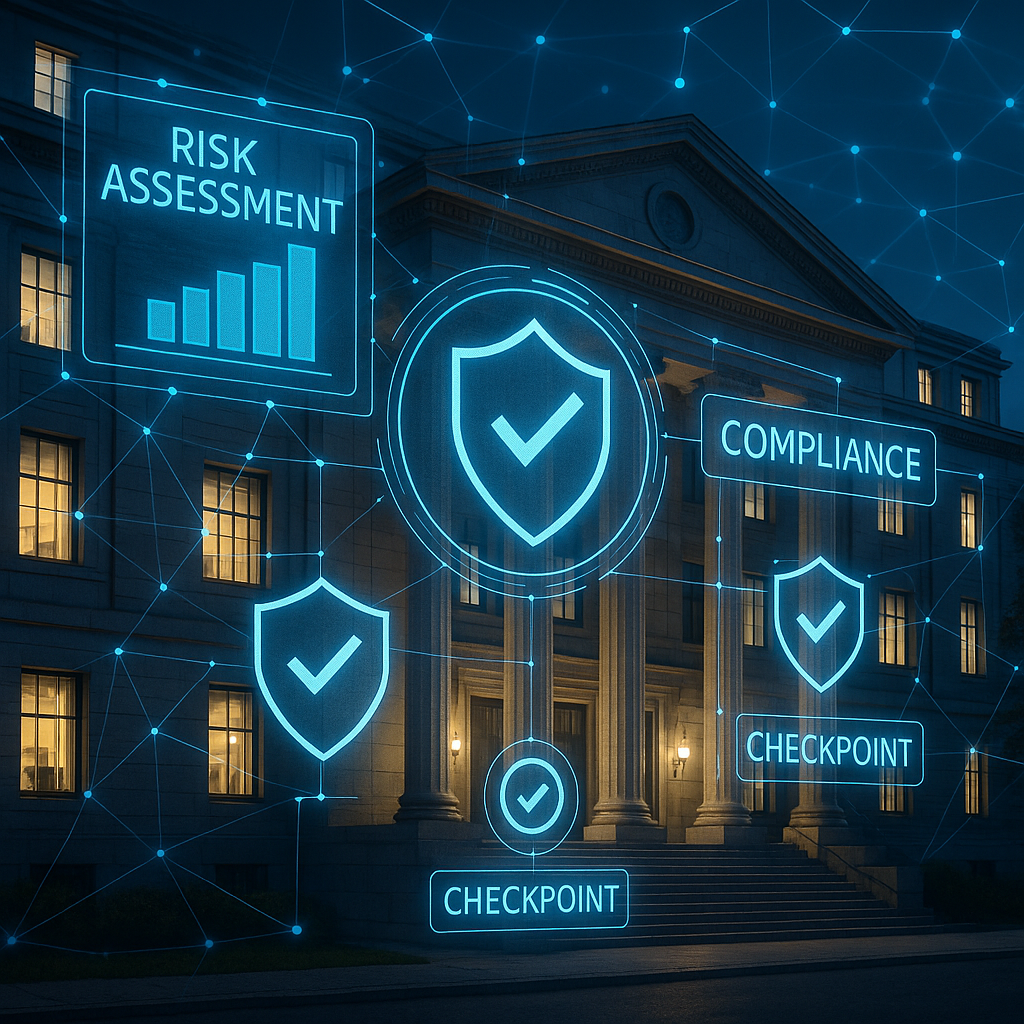
Government agencies face unprecedented cybersecurity threats and compliance complexities—discover how strategic IT risk assessment transforms vulnerability into resilience while meeting regulatory mandates.
Why Government IT Risk Assessment Has Never Been More Critical
Government agencies operate in an increasingly hostile digital landscape where cyberattacks aren't just growing in frequency—they're becoming more sophisticated, coordinated, and damaging. From ransomware targeting critical infrastructure to nation-state actors probing vulnerabilities in federal systems, the threat surface has expanded exponentially. At the same time, agencies must navigate a complex web of regulatory mandates including FedRAMP, FISMA, NIST 800-53, and OMB directives that demand rigorous documentation, continuous monitoring, and demonstrable security postures. The convergence of these pressures makes IT risk assessment not just a compliance checkbox, but a strategic imperative for mission success.
What sets government IT environments apart is their unique combination of legacy systems, mission-critical services, and public accountability. Unlike private sector organizations that can accept certain business risks, government agencies serve constituents who depend on uninterrupted access to services—from veterans' benefits to emergency response systems. A single vulnerability can cascade into national security implications, erode public trust, and trigger congressional oversight. This context demands a risk assessment approach that's both technically rigorous and strategically aligned with agency missions, resource constraints, and the evolving threat landscape.
The stakes have never been higher. Recent high-profile breaches have demonstrated that attackers are specifically targeting government supply chains, exploiting interconnected systems, and weaponizing the complexity that agencies struggle to manage. Traditional periodic assessments are no longer sufficient when threats evolve daily and when a single misconfigured cloud instance can expose sensitive citizen data. Forward-thinking agencies recognize that effective IT risk assessment must transform from an annual exercise into a continuous, intelligence-driven discipline that empowers decision-makers with real-time visibility into their security posture and enables proactive risk mitigation before incidents occur.
Building a Risk Assessment Framework That Aligns With Federal Compliance Standards
Creating an effective risk assessment framework for government IT systems requires more than adopting a commercial best practice—it demands deep integration with federal compliance standards that govern how agencies identify, categorize, and respond to risk. The foundation starts with NIST's Risk Management Framework (RMF), which provides a structured, repeatable process for integrating security and risk management activities into the system development lifecycle. Agencies must establish clear risk taxonomies that map to NIST SP 800-30 guidance while simultaneously addressing agency-specific requirements from FISMA, OMB mandates, and sector-specific regulations like HIPAA for health agencies or CJIS for law enforcement systems.
The challenge lies in creating frameworks that are both comprehensive enough to satisfy auditors and practical enough for teams to execute consistently. This means defining risk appetite statements that translate policy into actionable thresholds, establishing governance structures that empower risk owners across organizational silos, and implementing assessment methodologies that can scale across diverse technology environments—from mainframes running COBOL to containerized microservices in hybrid cloud environments. Successful frameworks incorporate role-based access controls that ensure sensitive risk data is appropriately compartmentalized while maintaining the traceability and auditability that federal oversight requires.
Modern risk frameworks must also account for continuous Authority to Operate (ATO) requirements and the shift toward DevSecOps practices in government modernization initiatives. This demands automated evidence collection, real-time risk scoring mechanisms, and integration points with existing tools like vulnerability scanners, configuration management databases, and security information and event management (SIEM) platforms. By embedding risk assessment into CI/CD pipelines and infrastructure-as-code workflows, agencies can shift from labor-intensive manual assessments to continuous monitoring models that provide stakeholders with current risk postures rather than point-in-time snapshots that are outdated before the assessment report is finalized. The framework becomes not just a compliance artifact, but an operational asset that informs daily security decisions and resource allocation.
Automating Risk Identification and Traceability Across Complex Government Systems
Government IT environments present unique automation challenges due to their heterogeneity, scale, and stringent documentation requirements. A single agency might operate thousands of systems spanning multiple security domains, each with distinct risk profiles, interconnections, and compliance obligations. Manual risk identification in these environments is not only resource-intensive—it's fundamentally inadequate for capturing the dynamic nature of modern threats and the cascading impacts of vulnerabilities across interconnected systems. Automation becomes essential for maintaining comprehensive risk visibility, but it must be implemented thoughtfully to meet federal standards for accuracy, auditability, and human oversight.
Effective automation begins with structured data and standardized taxonomies that enable systems to communicate risk information consistently. This includes implementing Security Content Automation Protocol (SCAP) for vulnerability assessment, leveraging machine-readable security guides and compliance-as-code frameworks, and establishing data models that link technical findings to business impacts and regulatory requirements. Advanced approaches incorporate AI-powered relationship mapping that automatically traces dependencies between systems, identifies potential attack paths, and generates impact analyses when changes are proposed—capabilities that transform risk assessment from a periodic documentation exercise into a continuous intelligence function that supports real-time decision-making.
Traceability represents another critical dimension where automation delivers transformative value for government agencies. Federal auditors and oversight bodies require clear evidence chains showing how risks were identified, assessed, prioritized, and mitigated throughout system lifecycles. Manually maintaining these relationships across thousands of requirements, controls, test cases, and remediation activities is error-prone and unsustainable. Automated traceability solutions create bidirectional linkages between policy documents, system security plans, continuous monitoring outputs, and remediation workflows—ensuring that when a new threat emerges or a control fails, agencies can instantly identify affected systems, determine compliance gaps, and execute coordinated response actions. This level of systematic risk intelligence isn't just a productivity enhancement; it's becoming a prerequisite for agencies managing complex portfolios while demonstrating due diligence to stakeholders and maintaining public trust.
Transforming Legacy Infrastructure Through Strategic Risk-Informed Modernization
Legacy systems represent one of government IT's most persistent risk challenges—aging infrastructure that's critical to mission operations yet increasingly difficult to secure, maintain, and integrate with modern technologies. These systems often run on outdated platforms with known vulnerabilities, lack modern security controls, and depend on scarce expertise as the workforce that built them approaches retirement. However, wholesale replacement isn't always feasible given budget constraints, operational dependencies, and the complexity of migrating decades of institutional knowledge embedded in custom code and business logic. The solution lies in risk-informed modernization strategies that systematically prioritize investments based on threat exposure, mission criticality, and technical debt while maintaining operational continuity.
A strategic approach begins with comprehensive risk baselining that quantifies the true cost of legacy systems—not just maintenance expenses, but the cumulative risk exposure from security vulnerabilities, compliance gaps, integration limitations, and operational fragility. This analysis creates a data-driven foundation for modernization roadmaps that sequence initiatives based on risk reduction potential rather than technology enthusiasm. Agencies can then employ targeted modernization tactics: encapsulating legacy systems behind modern API gateways to reduce attack surfaces, implementing compensating controls while migration planning proceeds, containerizing applications to enable gradual infrastructure updates, and leveraging strangler fig patterns to incrementally replace functionality without big-bang cutover events that introduce unacceptable operational risk.
The most successful legacy modernization initiatives treat risk management as a continuous thread throughout transformation rather than a one-time assessment. This means establishing risk gates at each phase, maintaining parallel risk profiles for current and future states, and implementing rollback capabilities that allow agencies to retreat if modernization introduces unforeseen vulnerabilities. Modern approaches also leverage enterprise architecture frameworks to model dependencies, identify consolidation opportunities, and ensure new systems are designed with security and adaptability from inception. By framing modernization through a risk lens, agencies transform what's often seen as a daunting technical challenge into a strategic opportunity—reducing security exposure, improving operational resilience, and positioning themselves to adopt emerging technologies that enhance mission delivery while maintaining the trust and stability that citizens depend upon.
From Assessment to Action: Implementing Continuous Risk Management for Long-Term Success
The gap between risk assessment and risk management is where many government initiatives falter—producing comprehensive reports that document vulnerabilities yet fail to translate findings into sustained action that reduces exposure and improves security postures. Bridging this gap requires transforming risk assessment from a periodic compliance activity into an operational discipline embedded in daily workflows, resource planning, and executive decision-making. Continuous risk management recognizes that in dynamic threat environments, yesterday's assessment is already outdated, and that effective risk reduction demands ongoing visibility, prioritization, and adaptation rather than annual snapshots and static remediation plans.
Implementation begins with establishing feedback loops that connect risk findings to action workflows and track remediation effectiveness over time. This includes integrating risk data into ticketing systems, aligning risk priorities with sprint planning in agile development environments, and creating executive dashboards that provide leadership with actionable risk metrics rather than technical details. Successful programs also implement risk champions within business units—empowered individuals who translate security findings into mission context, advocate for remediation resources, and maintain accountability for risk acceptance decisions. These structural changes ensure risk management becomes a shared responsibility across the organization rather than a siloed security function that issues warnings without operational context.
Long-term success requires building institutional capabilities that sustain risk management through leadership changes, budget cycles, and evolving mission requirements. This includes documenting repeatable assessment methodologies, creating risk knowledge bases that capture lessons learned and agency-specific threat intelligence, and investing in training programs that develop risk literacy across technical and non-technical staff. Advanced programs leverage automation and AI to reduce manual effort, freeing risk professionals to focus on strategic analysis, stakeholder engagement, and continuous improvement. The ultimate goal is creating a risk-aware culture where security considerations are naturally incorporated into decision-making, where teams proactively identify and escalate emerging threats, and where agencies can demonstrate to oversight bodies and citizens alike that they're systematically protecting sensitive data, critical services, and public trust through disciplined, continuous risk management practices that evolve as rapidly as the threats they address.